Differences Between CART and Captioning

Differences Between CART and Captioning

Have you ever found yourself in the position where you have a client, student, or colleague request accommodations according to the Americans with Disabilities Act, specifically CART (Communication Access Realtime Translation) or closed captioning?  There are several methods of providing the spoken word to those who are deaf or hard of hearing, and in this blog article we’ll focus on CART and captioning, their differences, and what you need to know if you are confronted with this request.

Most people are familiar with captioning because they’ve seen it on their own televisions or in a restaurant that may be displaying it on their televisions.  Captioning is a method of displaying the spoken word through an encoder onto a screen (usually a television or large projection screen) for either a live or recorded event.

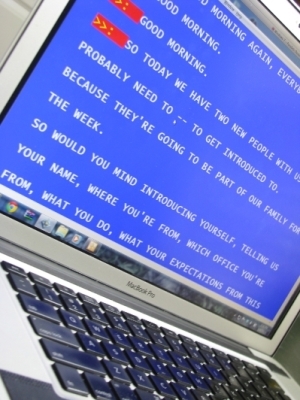
CART is also a method of capturing the spoken word and displaying it for the consumer(s) to view.  This can either be displayed on a laptop computer for one individual consumer, or it could be projected onto a large screen for multiple consumers to view at the same time.  The latter method is ideal for conferences or large meetings.  CART on a laptop could be used in a smaller setting such as high school or college classes, training sessions, medical appointments, or small meetings.

Both methods use the same basic process:  a court reporter will attend the event, taking down the spoken word on her stenography machine, which is connected to her laptop.  The information is then electronically transmitted to a laptop, overhead projector, or encoder for the consumer(s) to view.

If you receive a request from a consumer for CART or captioning for an event, the first thing you will need to do is find a qualified court reporting firm who employs court reporters with that skill set.  Not every court reporter is prepared or skilled to provide CART and captioning.  There are certifications court reporters can attain through the National Court Reporters Association (NCRA).  They are Certified Realtime Reporter (CRR) and Certified Broadcast Captioner (CBC).  So be sure to ask the court reporting firm for a certified court reporter.  You will also need to determine if you need CART or captioning services, as each requires specific equipment, and the costs for each could vary.

In order to provide the best services for you and the consumer, it is extremely helpful if you can provide the court reporting firm with as much information or printed material ahead of time.  This may include printed speeches, PowerPoint presentations, names of speakers, or any complicated or technical terminology that may be discussed during your event.

Once you find a qualified court reporting firm, they can usually walk you through the specifics of your event and help you determine anything additional you may need.

To help you make sure you have gathered all the details needed when scheduling your next CART or captioning event, download the Quick CART and Captioning Scheduling Checklist.

[cta id=”4200″]


ABOUT THE AUTHOR:

Angie Starbuck, RPR/CRR, is a court reporter in Columbus, Ohio, and the owner of PRI Court Reporting, LLC. Connect with her on LinkedIn and Google+.

Download the Deposition Scheduling Checklist

  • This field is for validation purposes and should be left unchanged.

Columbus Attorneys Offer Tips on Work-Life Balance

Columbus Attorneys Offer Tips on Work-Life Balance

Recently I had the pleasure of attending a luncheon seminar put on by the Women Lawyers of Franklin County which featured a presentation by two Columbus attorneys, Stephanie Hanna (Carlile Patchen & Murphy) and Simi Botic (Dinsmore & Shohl).  In addition to her career as a healthcare attorney, Simi is also a holistic health coach at The Micro Harvest.

The subject was “How to Create a Healthy Work-Life Balance,” and the timing couldn’t have been better, with Thanksgiving only a couple weeks away and Christmas speeding towards me.

I felt this was such a fun presentation with great information that I wanted to share with others, so I got the permission of Stephanie and Simi to share some of this information in our blog.  They offered simple tips to start a practice of self-care in three areas of our lives that can wreak havoc on our health, our diet, and our sanity!  Here are a few of their great tips:

Relationships

Career

Health

With the holidays coming, everyone’s life gets a little more hectic, so don’t try to make a lot of changes all at once.  Pick one or two of these to focus on at a time and then gradually add another.  Thinking you need to change many habits all at once will set you up for failure.  One of my favorite messages is, “Forgive yourself for your inability to be perfect.”  Perfection cannot be achieved, but, rather, setting a goal to make yourself better than you were the day before is manageable.

You can also get some great recipes, inspiration, and tips by visiting The Micro Harvest.

Enjoy the holidays!

Angie sigt 2.jpg


ABOUT THE AUTHOR:

Angie Starbuck is a court reporter in Columbus, Ohio, and the owner of PRI Court Reporting, LLC. Connect with her on LinkedIn and Google+.

Download the Deposition Scheduling Checklist

  • This field is for validation purposes and should be left unchanged.

Attorneys: 3 Things to Delegate to Your Legal Assistant

Attorneys: 3 Things to Delegate to Your Legal Assistant

Many young attorneys are coming into the legal profession with increased technology skills.  This could be a double-edged sword in the legal office setting.  While it’s very helpful when an attorney can type and proficiently use word processing programs, there’s one important person that is being under-utilized:  your legal assistant.  Here are three things that you could delegate to her that will free you up to work on other tasks:

  1. Typing letters and other documents.  Most likely, your assistant has many, many templates for letters and other legal documents. Either dictate the letter for her or give her the basics of what the letter should contain.  Let her prepare the document for your approval.
  2. Deposition notices.  Again, your assistant has probably created hundreds of these and has the format set up on her computer.  Give her the details of the deposition and let her create the deposition notice for your signature.
  3. Proofreading/editing.  A second set of eyes is always a good idea on something you’ve written.  It’s easy for you to get lost in the ideas you’re writing about and overlook simple punctuation or grammatical errors that someone else could see.

Allowing your assistant to take on these tasks will free you up for other work, and probably please your client, since they won’t have to pay your hourly rate to create letters and basic legal documents.


ABOUT THE AUTHOR:

Angie Starbuck is a court reporter in Columbus, Ohio, and the owner of PRI Court Reporting, LLC. Connect with her on LinkedIn and Google+.

Download the Deposition Scheduling Checklist

  • This field is for validation purposes and should be left unchanged.

Benefit From Your LOCAL Court Reporting Firm Relationship

Benefit From Your LOCAL Court Reporting Firm Relationship

There are many small, individually-owned court reporting firms in cities dotting the United States map.  Many of these firms are owned by a former or current court reporter themselves.  They understand the business of court reporting, how to keep a record of proceedings with a great degree of accuracy.  They build personal relationships with their attorney clients and the paralegals and assistants they work with.

Local court reporting firms have to fight to keep their business and to obtain new business, and the Goliath they are competing against are “national” court reporting firms.  These “national” firms hire outside sales representatives to market their firm and contract with insurance companies and offer lower rates and incentives in exchange for their business.  They entice you with the offer of having a court reporter in any city you may be traveling to.

In reality, these national firms do not employ court reporters all across the country, nor do they have offices across the country.  They will subcontract with local, independent court reporters, and even court reporting firms, in whatever city the attorney is traveling to.  Sometimes attorneys will call a “national” firm to cover a deposition in their hometown and the national firm will subcontract with local court reporters, whom the attorney could have hired himself and avoided the high costs of working with a national firm.

Many local court reporting firms can offer the same services the “national” firms provide, usually with better customer service and personal relationships.  In most cases, the reporters working with that firm are long-time employees.  Your local court reporting firm can save you time and money, while offering you the great customer service you’ve become accustomed to.  No matter what city you are in, if you want to build a relationship with individuals who are as interested in your success as they are in their own, please consider working with your local court reporting firm.


ABOUT THE AUTHOR:

Angie Starbuck, RPR/CRR, is a court reporter in Columbus, Ohio, and the owner of PRI Court Reporting, LLC. Connect with her on LinkedIn and Google+.

Download the Deposition Scheduling Checklist

  • This field is for validation purposes and should be left unchanged.

Photo credit: Lancaster Chamber: http://www.lancasterchamber.com/article.aspx?page=thinklocal

Lessons Learned – by Angie Starbuck, RPR/CRR

Lessons Learned – by Angie Starbuck, RPR/CRR

As I left the blustery, cold weather of Columbus for the surfer-size waves and sunshine of Laguna Niguel, California, I anticipated all the knowledge I would gain at my first Firm Owners Conference sponsored by the National Court Reporters Association.  Little did I know I would make quick friends with other firm owners across the country and that they would be so willing to share their knowledge and experience to the newcomer.

I learned that a large networking event like Firm Owners can be like speed dating: Introduce yourself, exchange contact information and a little bit about each other, and move on quickly to another new contact.  However, during the keynote speech by Tommy Spalding, author of the New York Times bestseller, “It’s Not Just Who You Know,” I quickly learned that building actual relationships are more important than brief contact and superficial communications.  It was very energizing to hear him talk about truly getting to know someone, building a relationship, and how that can change your heart, change your life, and change your business.

I have many, many take-aways from my first Firm Owners conference, but here are just a few:

Wow, what a successful first Firm Owners Conference!  A huge thank you to Susie, Christy, Dawn B., Chris B., Dawn H., Greg, Shannon, Judy, Michelle, Gail, and Lori for sharing their experiences with me and welcoming me into such a fantastic group of business owners that I am proud to be a part of.


ABOUT THE AUTHOR:

Angie Starbuck, RPR/CRR, is a court reporter in Columbus, Ohio, and the owner of PRI Court Reporting, LLC. Connect with her on LinkedIn and Google+.

Download the Deposition Scheduling Checklist

  • This field is for validation purposes and should be left unchanged.

USMC and PRI Founder Share the Same Birthday. Who Knew?

USMC and PRI Founder Share the Same Birthday. Who Knew?

A man is graduating from Marine Corps bootcamp this weekend. He is a Marine today and will be forever. His name is Zachary and he is only 19 years old. Zach is on the doorstep of the rest of his life and I’m sure he is proud, happy, and scared all at the same time. The Marine Corps also celebrates its birthday tomorrow. This is a unique holiday for these warriors, who celebrate and honor the Corps and country.

Linda Sturm, the founder of PRI, is also celebrating her birthday on November 10. It took me almost 20 years to put two and two together to realize that Linda and the Marine Corps share the same birthday. And how appropriate to recognize that fact in 2012. Linda founded this company over 30 years ago, and at the time, I’m sure she felt many of the same feelings Zach will be feeling this weekend. It was probably an overwhelming, scary, yet happy time for her! Linda is also embarking on a new stage of her life in 2013, one that is probably equally uncertain, yet happy, since she has retired from PRI.

As the sister of a Marine, a friend of Zach’s, and a loyal employee and friend of Linda’s, I’m pleased that they are all sharing this special day. I wish them all the very best of luck, the strength to face their challenges, and the protection of the Lord as they move forward.

Happy birthday, Linda and the Marine Corps.  Congratulations, Zach, and Godspeed.

Top