A Career in Court Reporting: Captioning, Basketball, and March Madness

A Career in Court Reporting: Captioning, Basketball, and March Madness

Thanks to a charismatic, talented basketball player at the University of Wisconsin, court reporting (called stenography in the press) has been placed front and center in the media during March Madness.  If you’ve ever wondered what a court reporter does or you have considered a career in court reporting, now is a great time to join this rewarding profession.

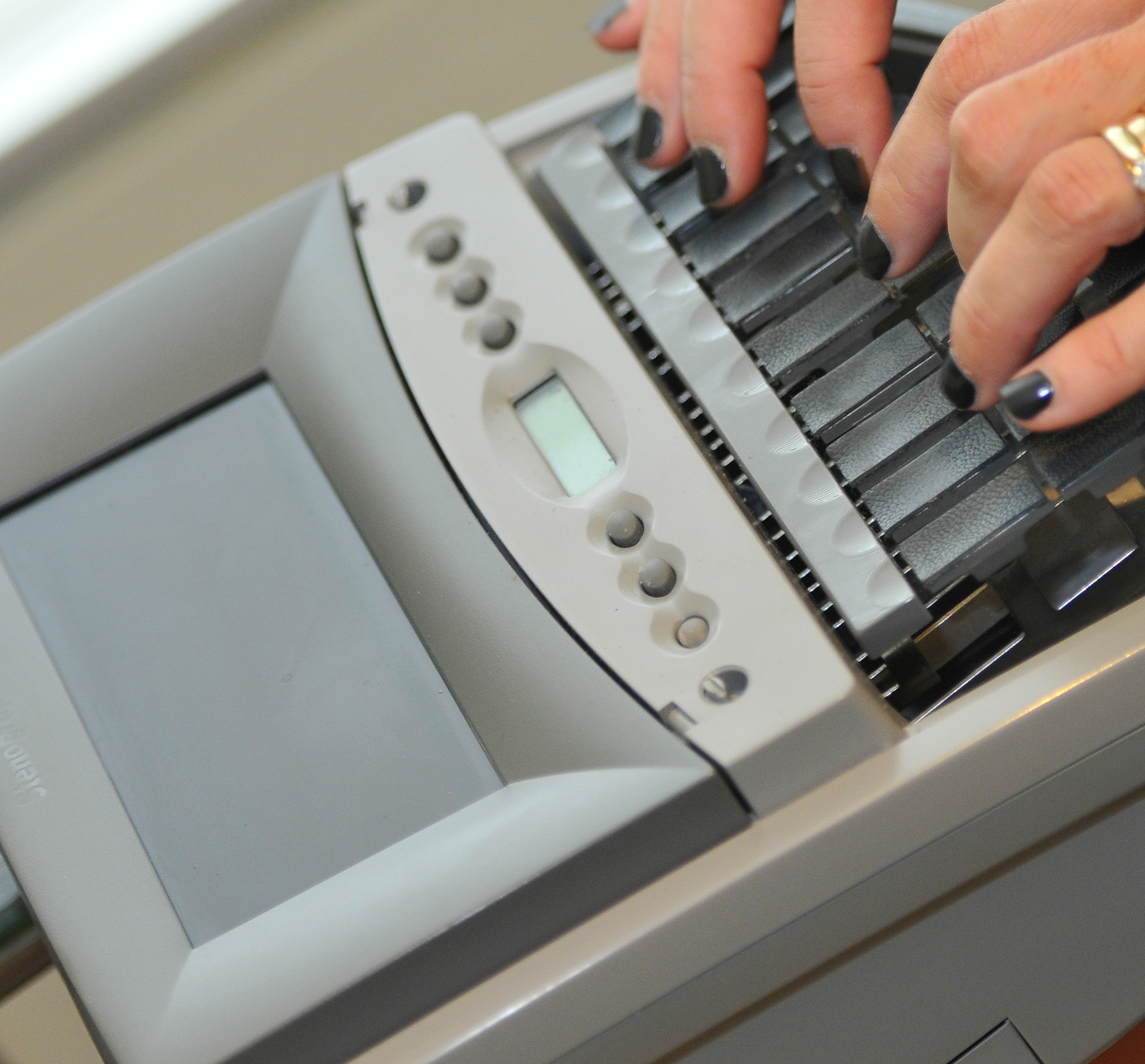
Court reporting is one of those jobs about which people usually say, “Oh, that’s a real job?” or “Oh, you’re the one who sits there and does this (typing motion with their hands)?”  Again, thanks to Nigel Hayes, hopefully that perception is changing.  Court reporting is no longer an archaic form of recording testimony, and it hasn’t been for many decades.  Court reporting equipment and technology is very modern, even state of the art, while it still utilizes the basic methods created over 100 years ago.

Today, a graduate from court reporting school can find himself or herself working in many different situations.  Here are just a few:

According to a recent study by Ducker Worldwide, there are currently 32,000 court reporters working in the United States.  However, 70% of the court reporting population is over the age of 46, which means that in the coming years, there will be significant retirement rates, creating a critical shortfall in court reporters.  Ducker Worldwide estimates that the demand for court reporters will exceed supply within five years and they state that this “presents a substantial opportunity for those seeking a lucrative career with a secure future.”

There are some perceptions about court reporting that create barriers to getting young students into court reporting programs.  Court reporting is not a top-of-mind career and it has been relatively unknown – until now, thanks to a certain Wisconsin Badger!  There is also a trend for high school counselors to guide students towards four-year degrees.

If you or someone you know is interested in a career in court reporting, CART, or captioning, contact your local court reporting firm or visit www.crtakenote.com, which is a resource provided by the National Court Reporters Association (NCRA).

In the meantime, keep watching the NCAA tournament and wait for Nigel Hayes to charm everyone with his ability to challenge the court reporter!


ABOUT THE AUTHOR:

Angie Starbuck, RPR, CRR, CCP is a court reporter in Columbus, Ohio, and the owner of PRI Court Reporting, LLC. Connect with her on LinkedIn.  You can also follow PRI Court Reporting on Twitter and Facebook.
Download the Deposition Scheduling Checklist

  • This field is for validation purposes and should be left unchanged.

An Interview with Columbus Court Reporter – Rhonda Lawrence

An Interview with Columbus Court Reporter – Rhonda Lawrence

PRI Court Reporting is lucky enough to have a very talented and experienced team of employees.  Rhonda Lawrence is a court reporter in Columbus, Ohio and she has been with PRI for a total of 17 years. Rhonda is a very skilled realtime writer and very upbeat and friendly.  You have probably met Rhonda at a deposition, so here’s a chance to get to know her a little better.

How long have you been a court reporter?
I have been a court reporter since March of 1988.  I can’t believe it’s been 26 years.  I hope I still have 20 years left in me.

How long have you been with PRI?
I came back to PRI in August of 2002.  Previously, I worked for PRI from 1989 to 1995.

What do you like most about working at PRI?
If I had to pick only one thing that I like most about working at PRI, it would be the people; not only the court reporters and PRI staff, but the attorneys that we work for.

Where are you from or where did you grow up?
I grew up in Waldo, Ohio (home of the famous G&R bologna sandwich), but I’ve been in Columbus for so long that it’s the only place that gives me that “home” feeling.

Before working as a court reporter, did you have another career or job?
While I was going to court reporting school, I also worked full-time as a legal secretary in Marion through the week and at Chi-Chi’s Restaurant on the weekends.

What is one thing you would like our clients to know about court reporting, either depositions or CART?
I have found over the years that clients like to use the same court reporter for all of their depositions in a case.  That way attorneys/witnesses do not have to keep repeating vocabulary and spellings.

What is the most unusual deposition setting you’ve found yourself in?
I would not call it “unusual,” but by far my best assignment I’ve been on was a 6-week trial in Florida.  I’m sure I do not need to elaborate any further than “Florida.”

What is on your iPod?
My favorite vocal artist to this day remains Jon Bon Jovi.

What is one thing our clients don’t know about you?
I have a side business/hobby in photography/video production.  While I’ve recently begun taking portraits, my specialty is photographing high school sports teams in action and producing the team banquet video.

What is your favorite Columbus restaurant?
My favorite restaurant in Columbus is The Melting Pot.  It’s the only place that I never pass on dessert.

What is your favorite app?
My favorite app is Facebook.  I love to be connected with my family and friends so easily.

What do you like to do when you’re not at work?
When I am not working on transcripts, I am usually taking/editing photographs and making photograph videos.

What is your best tip for balancing work/life/family?
The best tip for balancing work and family is to have an understanding family when I have to put work first and an understanding boss when I have to put family first.


We hope you’ve enjoyed learning a little more about Rhonda.  Look for more interviews with other PRI Court Reporting staff in the future.

Download the Deposition Scheduling Checklist

  • This field is for validation purposes and should be left unchanged.

An Interview with Columbus Court Reporter – Julia Lamb

An Interview with Columbus Court Reporter – Julia Lamb

PRI Court Reporting is lucky enough to have a very talented and friendly team of employees.  Julia Lamb is a court reporter in Columbus, Ohio.  She has been with PRI for eight  years, and we’re so happy to have someone with Julia’s skills on our team.  You have probably met Julia at a deposition, so here’s a chance to get to know her a little better.

How long have you been working at PRI?
I started with PRI in July of 2006.

How long have you been a court reporter?
I have been a court reporter for over 26 years.

What court reporting experience did you have prior to joining PRI?
I worked in Franklin County Domestic Court for five years, and I worked for another court reporting firm for 14 years before that.

What do you like most about working at PRI?
The people I work with are great.  Karen and Gary are always so helpful and all the court reporters have a good camaraderie.

Where are you from or where did you grow up?
I am from Canton, Ohio, where I lived since the age of 13.  Before that, we lived in Michigan.

Before working as a court reporter, did you have another career or job?
I was a secretary at night at the Canton Jewish Community Center while attending college, and I began babysitting when I was 11 years old.

What is one thing you would like our clients to know about court reporting?
We are humans and we make mistakes.

What’s the most unusual deposition situation you’ve found yourself in?
Alone in a locked room at the Southern Ohio Correctional Facility with an inmate weighing well over 300 pounds, and not handcuffed, while the attorneys left the room to see if they had further questions.

What is on your iPod?
I haven’t been bit by the Apple bug yet, but I love the radio…lol.

What is one thing our clients don’t know about you?
I am a good cook – but don’t tell my husband because he does the cooking and I want to keep it that way!!

What is your favorite Columbus restaurant?
Who can pick one when there are so many?!?

What is your favorite app?
Gas Buddy.

What do you like to do when you’re not at work?
Spend time with my family.

What is your best tip for balancing work/life/family?
Don’t procrastinate.


We hope you’ve enjoyed learning a little more about Julia.  Look for more interviews with other PRI Court Reporting staff in the future.

Download the Deposition Scheduling Checklist

  • This field is for validation purposes and should be left unchanged.

No Time For Lunch?

No Time For Lunch?

If you often find yourself making excuses to coworkers or yourself about why you can’t get away from your desk for lunch, you’re not alone!  According to a Right Management survey* of 1,023 workers, 28% said they seldom, if ever, take a break for lunch, and 39% of those workers say they do, but usually stay at their desk.

We have partnered with an expert in this field, Kim Cox, health coach at Benefit Wellness in Plain City, Ohio, to shed some light on the drawbacks of this habit and to provide some suggestions on how to break out of this habit to improve your health.

Sitting for too long at a sedentary job can contribute to health problems from head to toe, including heart disease, strained neck and back, tight hips, disk damage, and poor circulation in the legs.  Another downside of skipping lunch is you may be inclined to binge later in the day and make poor food choices for snacks from a vending machine or fast food dinners.

Kim suggests compartmentalizing and building in time for intended breaks and lunch during your work day.

Here are some of the benefits of taking time for yourself and for lunch:

All of these things will lead to improved productivity at work and, more importantly, improve your health.

“The groundwork to all happiness is good health.”  ~Leigh Hun


ABOUT THE AUTHOR:

Angie Starbuck is a court reporter in Columbus, Ohio, and the owner of PRI Court Reporting, LLC. Connect with her on LinkedIn and Google+.

Kim Cox is an ACE Health Coach emphasizing fitness, nutrition, and behavior modification.  She is dedicated to helping individuals work towards greater balance, purpose, and well-being.  She is the founder of Benefit Wellness in Plain City, Ohio.  You can connect with Kim on Facebook @Benefit Wellness or www.benefitwellnessonline.com.

*Source for Right Management Survey here.

Photo credit can be found here.

Download the Deposition Scheduling Checklist

  • This field is for validation purposes and should be left unchanged.

An Interview with Columbus Court Reporter – Christine Woodruff

An Interview with Columbus Court Reporter – Christine Woodruff

PRI Court Reporting is lucky enough to have a very talented and friendly team of employees.  Christine Woodruff is a court reporter in Columbus, Ohio, and she has been with PRI for over 13 years. Christine concentrates her work in the CART setting, but has deposition experience, also.  Christine is very professional, friendly, and talented.  You have probably met her at a deposition or CART job, so here’s a chance to get to know her a little better.

How long have you been a court reporter?
I have been a court reporter for 13 years.

How long have you been working at PRI Court Reporting?
I have worked for PRI all of my court reporting career.

Did you have other court reporting experience prior to joining PRI?
I did a short assignment as an intern at the Franklin County courthouse at the end of my schooling.

What do you like most about working at PRI?
I love the people I work with at PRI.  I also like the variety of work that is available at PRI because it never gets old or boring. I am constantly learning new things and meeting new people.

Where are you from or where did you grow up?
I grew up in Grove City, Ohio.  I went to a Catholic school through middle school, and then I graduated from Grove City High School.  My parents grew up in Grove City, as well.

Before working as a court reporter, did you have another career or job?  If so, what?
Before working for PRI, I had a few other jobs.  The job I had immediately before PRI was as a safety coordinator for a wood manufacturing plant.  I developed and taught safety trainings, helped develop and organize the plant’s safety program, and kept all the records for the plant that were required by OSHA.  I also briefly held my Realtor’s license.

What is one thing you would like our clients to know about court reporting/depositions/CART?
The biggest thing I would tell our clients about court reporting is that court reporters are not as familiar with the case or the subject matter as they are, so any information you can share ahead of time will make the court reporter’s job easier.  Specifically, things such as names of the parties involved and any technical or medical terms that will likely come up will be very helpful.

What is the most unusual deposition/CART situation you’ve found yourself in?
The most unusual place I have been in for my job is the conference room looking out at the “death house” at an Ohio correctional institution.  Some of the interesting subjects that I have encountered are landscape architecture, nursing, engineering, disability studies, deaf history, fine arts, organic chemistry, physics,  CAD, welding, Greek mythology, genetic engineering, physiology, child development, psychology, Asian philosophy, ASL, Six Sigma, ceramics, and many more.  I have met very interesting and unusual people, too.

What’s on your iPod?
My favorite thing to listen to is talk radio or podcasts; however, I am a fan of most types of music including country, classical, musicals, rock, alternative, gospel, and Christian music.

What is one thing our clients don’t know about you?
I was a den mom for Boy Scouts and a leader for Girl Scouts.

What is your favorite Columbus restaurant?
I love The Cheesecake Factory!

What is your favorite app?
My favorite apps are Kindle and YouVersion, but I use Waze the most often.

What do you like to do when you’re not at work?
When I am not at work, I am usually with my children or playing with my grandson.  I enjoy volunteering for anything that allows me to be involved in any way with my kids, which includes school events, sporting events, or even just being their personal taxi driver.  I also enjoy playing tennis, volleyball, and other sports.

What is your best tip for balancing work/life/family?
Set priorities and stick with them, and use your time wisely.


We hope you’ve enjoyed learning a little more about Christine.  Look for more interviews with other PRI Court Reporting staff in the future.

Download the Deposition Scheduling Checklist

  • This field is for validation purposes and should be left unchanged.

Steps a Court Reporter Takes to Prepare a Transcript for Production

Steps a Court Reporter Takes to Prepare a Transcript for Production

Do you ever wonder about how a court reporter gets such a great transcript to you after your deposition and the steps she takes to accomplish this?

Imagine this:  You’ve just completed an all-day deposition of the expert witness in your case and you’ve lightened the load in your briefcase by giving all your exhibits to the court reporter.  You’ve told her that you need the transcript expedited.  You’ve been watching the realtime screen all day, so you know how clean the transcript is.  It can’t be that difficult or take that long to get the transcript ready for delivery, right?

While your favorite court reporter is very good at her job – she must be, otherwise you wouldn’t hire her, right? —  producing a transcript isn’t as easy as hitting the print button on her computer.

Here are some of the steps a good court reporter will go through once the deposition is over in order to produce a clean, accurate transcript that will help you and your client:

Depending on the type of deposition and the complexity of the case or the witness, it could take up to two times the length of the deposition for the court reporter to complete the transcript.  So for a four-hour deposition, she could spend eight hours on editing and proofreading that transcript.

So remember, after your all-day deposition is over and you’ve expedited that transcript for overnight delivery, your favorite court reporter will be up for hours that night reading, editing, and proofreading in order to provide you with the great service and accurate transcript you’ve become accustomed to.


ABOUT THE AUTHOR:

Angie Starbuck is a court reporter in Columbus, Ohio, and the owner of PRI Court Reporting, LLC. Connect with her on LinkedIn and Google+.

Download the Deposition Scheduling Checklist

  • This field is for validation purposes and should be left unchanged.


Questions to Ask When Hiring a CART Provider

Questions to Ask When Hiring a CART Provider

If you are an individual who is deaf or hard of hearing, or you are working with someone who is, you may be faced with a situation where you need to locate and hire a CART provider.  Here are some helpful questions to ask a potential CART provider to give you confidence that they are qualified to provide the services you need. You can keep this list handy while doing your research to help you remember all the details.

1.  Are you a certified CART provider?
The National Court Reporters Association (NCRA) offers certifications that court reporters can obtain by demonstrating their proficiency in the skills needed to provide CART or captioning services. The certifications you should look for or ask about are Certified Realtime Reporter (CRR), Certified CART Provider (CCP), Certified Broadcast Captioner (CBC).

2.  What experience do you have in providing CART?
You will want to find someone who has experience with the type of situation for which you are needing CART services.  Do they have experience providing CART in classrooms, conferences, meetings?

3.  Do you provide CART on your device or do I have to provide my own?
Most CART providers will provide a screen for you to view during the event.  They may be able to send the feed to your laptop, iPad, or other tablet device upon request.  Does the CART provider provide an overhead for use with a large group?

4.  What are your rates?
Does the CART provider charge an hourly rate?  Do they charge a half day or full day rate?  Are there hourly minimums, such as a two-hour minimum? Is there a different charge for CART services for one individual versus a large group?

5.  Does the rate include providing a transcript of the event or session?
If the provider’s rate includes a transcript, ask in what format they provide the transcript; i.e., PDF, ASCII, Word.  If they don’t include a transcript in the rates, is there an additional cost to obtain a transcript?

You can find certified CART providers in your area by searching the NCRA sourcebook or contacting your local court reporting firm to get a referral.


To help you make sure you have gathered all the details needed when scheduling your next CART or captioning event, download the Quick CART and Captioning Scheduling Checklist.

[cta id=”4200″]


ABOUT THE AUTHOR:

Angie Starbuck, RPR/CRR, is a court reporter in Columbus, Ohio, and the owner of PRI Court Reporting, LLC.   Angie is an experienced CART and captioning provider.  Connect with her on LinkedIn and Google+.

Download the Deposition Scheduling Checklist

  • This field is for validation purposes and should be left unchanged.


PRI Court Reporting Administrative Spotlight: Production Manager Gary Burgard

PRI Court Reporting Administrative Spotlight: Production Manager Gary Burgard

PRI Court Reporting has a very experienced and knowledgeable team of internal office staff.  Gary Burgard is our production manager.  He is our longest tenured employee and he’s served many different roles over the years.  We’re lucky to have him!  You may have spoken with Gary on the phone when scheduling a deposition or ordering a transcript, so here’s a chance to get to know him a little better.

What are you responsible for at PRI Court Reporting?  
My primary responsibility is to get transcripts to clients, which includes files in various formats, exhibits, and a PRI Portfolio which is a searchable hyperlinked file in PDF format.  I also do filings, scheduling, issue and have subpoenas served for depositions.

How long have you been with PRI?
It will be 27 years on March 17, 2014.

Did you have other court reporting experience prior to joining PRI?
Yes.  I worked for Lord Reporting as a federal “court reporter” recording and transcribing hearings and trials for the government.

What is your favorite part about working at PRI?
The people are great to work with.

Where are you from or where did you grow up?
Born in Adrian, Michigan, grew up in Toledo, Ohio

What was the first job you ever had?
First real job was for a veterinarian, three years in high school and the first year of college when on break.

What is one thing you would like our clients to know about transcript production/scheduling? 
It’s easy to schedule a court reporter using PRI’s website.  Just go to www.priohio.com and click on the green Schedule Now button.  Follow the prompts, and once completed you will receive an e-mail confirmation.  Another e-mail confirmation will be sent the day before.

What do you like to do when you’re not at work?
Concerts, movies.

What’s on your iPod? 
Everything from Bach to Rammstein.

What is one thing our clients don’t know about you?
I was a working musician for 15 years.

What is your favorite restaurant in Columbus?
Rancho Alegre.

What is your favorite app?
I have no cell phone, no apps.


We hope you’ve enjoyed learning a little more about Gary.  Look for more interviews with other PRI Court Reporting staff in the future.

Court Reporting Ethics: Incentive Gifts to Attorneys

Court Reporting Ethics: Incentive Gifts to Attorneys

Does your court reporting firm offer you, your assistant, or your paralegal, gifts of money, gift cards, or products in exchange for scheduling your depositions with them?  Over the years, some court reporting firms have participated in a disturbing practice of offering “rewards programs” for attorneys and their law firms whereby the scheduler of depositions earns points or gifts every time they schedule with that court reporting firm.

This can be a dangerous practice for court reporting firms as well as the attorneys and their clients.  As keepers of the record and officers of the court, court reporters should maintain impartiality and neutrality in order to protect the integrity of our profession.

The National Court Reporters Association (NCRA) Code of Professional Ethics states that members shall, “Refrain from giving, directly or indirectly, any gift or anything of value to attorneys or their staff, other clients or their staff, or any other persons or entities associated with any litigation, which exceeds $150 in the aggregate per recipient each year.  Nothing offered in exchange for future work is permissible, regardless of its value.”  NCRA has further distinguished between “thank you” gifts (such as pens, coffee mugs, and other marketing materials), and “incentive” gifts, which are given in exchange for the promise of future work.

NCRA has formed Ethics First, which is a “voluntary…public awareness program that seeks to positively educate court reporters, colleagues, firms, and in particular, their clients and consumers,” about why the impartiality and neutrality of the court reporter is so important in maintaining our legal system.  If you would like to help maintain an unbiased legal system, please consider using a court reporting firm that is an Ethics First member, and one that doesn’t use gifting as a way to increase their business.

While the court reporter’s concern about impartiality is of utmost importance to them, attorneys and law firms should also be concerned about their participation in “rewards programs.”  Here are some things to think about:

So when scheduling your depositions, whether locally or nationally, don’t hesitate to ask the firm if they are an Ethics First participant.  Consider using a firm with qualified, experienced court reporters so you know you’ll receive the best services for your client, and don’t be fooled by the gifts!


ABOUT THE AUTHOR:

Angie Starbuck is a court reporter in Columbus, Ohio, and the owner of PRI Court Reporting, LLC. Angie is an individual participant in NCRA Ethics First, and PRI Court Reporting is a proud Ethics First firm participant.  Connect with her on LinkedIn and Google+.

Photo credit here.

Download the Deposition Scheduling Checklist

  • This field is for validation purposes and should be left unchanged.


Video Deposition Tips for Attorneys and Their Witnesses

Video Deposition Tips for Attorneys and Their Witnesses

Video depositions can be very helpful to your case and they are sometimes even necessary to be used during trial.  For these reasons, it would be to your benefit to make sure you get the best quality video you can.  Here are a few key things court reporters and videographers have learned over the years that will help with this and hopefully keep your video off YouTube with the search term “worst video deposition”!

1.  Reserve a conference room with adequate space to accommodate all the parties and the addition of a videographer and his/her equipment.

2.  Make sure all parties are aware the videographer will need access to the conference room one hour prior to the start of the deposition so they can set up and test all equipment.

3.  The sound quality is best when the microphone is placed in the center of the shirt, about three inches below the chin.  Some attorneys place their microphone too low on their tie and this will affect audio quality and tends to add background noises, like paper shuffling or the microphone hitting the table.

4.  Please provide the videographer a copy of the notice prior to the start of the deposition.  This will give them helpful information to include at the beginning of the video to identify the case and parties.

5.  Remember to state clearly and loudly when you want to go off the record and confirm that the court reporter and videographer heard you; otherwise, they will continue recording the conversation.

6.  Always remove your microphone when standing up to leave the table or the room. Forgetting to do so can result in damage to the microphones as well as recording conversations you may not want on the video.

7.  As in any deposition, please speak one at a time.  This is especially important during a video deposition because court reporters try to interrupt as little as possible so they don’t leave you with a video for a jury that is full of unnecessary colloquy or that requires a lot of editing.

These tips should be helpful in ensuring your video deposition is valuable to your client and their case and one you would be pleased with presenting to a jury.


ABOUT THE AUTHOR:

Angie Starbuck is a court reporter in Columbus, Ohio, and the owner of PRI Court Reporting, LLC. Connect with her on LinkedIn and Google+.

Photo courtesy of NCRA.  Also, thanks to Matt Aurigema with Gema Video for his videography tips.

Download the Deposition Scheduling Checklist

  • This field is for validation purposes and should be left unchanged.


Top