
Jury Duty and CART
Recently PRI was contacted to provide CART (Communication Access Realtime Translation) services to a potential juror in Franklin County, Ohio, who was hard of hearing. This individual (consumer) has used CART services in the past and was very familiar with the benefits and impact of CART.
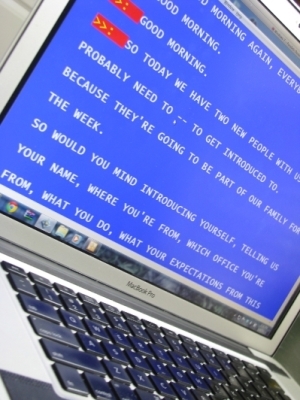
CART is accomplished by having a court reporter listening and taking down what is being said and transmitting the feed to a laptop for the consumer to view and read. It is the position of the National Court Reporters Association that, “A CART provider should refrain from working in the dual capacity of official reporter of proceedings and CART,” unless no other option exists. That’s where PRI became involved.
After some discussion on the logistics with the court staff, I attended the first jury pool meeting with the consumer and sat with her until she was called for voir dire (questioning of potential jury members) in a courtroom. I then proceeded to sit with her and provide CART for her until the trial began. The consumer was selected as a juror and another CART provider worked with her throughout the rest of the trial (see the blog post from her here).
There were three exciting things about this assignment for me:
- Being able to provide access to everything being said in the courtroom to someone who is deaf or hard of hearing. This is such a rewarding part of our job. Imagine if you couldn’t fully participate in meetings or church services or classes or court proceedings because you couldn’t hear everything that is being said? We are able to provide services that allow the consumer to more fully participate.
- This was an opportunity for me to educate and enlighten the general public about CART services. Many people don’t realize these services are available and that they can request them, if needed, as an accommodation. And many times people don’t understand that we are also the people that are behind the live captions on television.
- This was also an opportunity to help the court staff understand how to work with someone who is deaf or hard of hearing. This was the first time our local court had a request for CART services, so they weren’t always sure of what adjustments may need to be made to their processes. Many times I had to ask the staff to wait until I was set up and ready to write before they began speaking to the group. They would give instructions to the entire jury pool, but they wouldn’t wait for me to get set up and I would have to try to take quick notes to give the juror as they were talking.
I always enjoy the opportunity to share our profession with the public and, at the same time, provide much-needed services so that a consumer can participate in an event or meeting just like everyone else. If you ever have the opportunity to talk with a court reporter or CART provider, feel free to ask them about their profession (preferably on a break, when they’re not writing!) and I’m sure they would be glad to share their experiences with you.
ABOUT THE AUTHOR:
Angie Starbuck, RDR, CRR, CRC is a court reporter in Columbus, Ohio, and the owner of PRI Court Reporting, LLC. PRI has been a leader in the CART and captioning services industry for over 25 years and provides CART and captioning regularly for individuals in the legal, corporate, and educational settings. Connect with Angie on LinkedIn. You can also follow PRI Court Reporting on Twitter and Facebook.
Download the Deposition Scheduling Checklist

 I have been called to jury duty twice, and both times I was released immediately for the mere fact that I am a court reporter, being told I know too much about the legal process and know too many attorneys. So you can imagine my excitement when I was asked to be a CART (Communication Access Realtime Translation) provider for a hearing-impaired juror. Not only was it my first opportunity to sit with a jury, but it was also my first murder trial. Working as a freelance reporter, generally all of my work is civil in nature.