
Jury Duty and CART

Jury Duty and CART

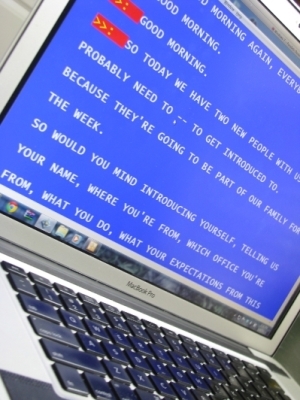
Sample of CART display

Recently PRI was contacted to provide CART (Communication Access Realtime Translation) services to a potential juror in Franklin County, Ohio, who was hard of hearing.  This individual (consumer) has used CART services in the past and was very familiar with the benefits and impact of CART.

CART is accomplished by having a court reporter listening and taking down what is being said and transmitting the feed to a laptop for the consumer to view and read.  It is the position of the National Court Reporters Association that, “A CART provider should refrain from working in the dual capacity of official reporter of proceedings and CART,” unless no other option exists.  That’s where PRI became involved.

After some discussion on the logistics with the court staff, I attended the first jury pool meeting with the consumer and sat with her until she was called for voir dire (questioning of potential jury members) in a courtroom.  I then proceeded to sit with her and provide CART for her until the trial began.  The consumer was selected as a juror and another CART provider worked with her throughout the rest of the trial (see the blog post from her here).

There were three exciting things about this assignment for me:

I always enjoy the opportunity to share our profession with the public and, at the same time, provide much-needed services so that a consumer can participate in an event or meeting just like everyone else.  If you ever have the opportunity to talk with a court reporter or CART provider, feel free to ask them about their profession (preferably on a break, when they’re not writing!) and I’m sure they would be glad to share their experiences with you.


ABOUT THE AUTHOR:

Angie Starbuck, RDR, CRR, CRC is a court reporter in Columbus, Ohio, and the owner of PRI Court Reporting, LLC.  PRI has been a leader in the CART and captioning services industry for over 25 years and provides CART and captioning regularly for individuals in the legal, corporate, and educational settings.  Connect with Angie on LinkedIn.  You can also follow PRI Court Reporting on Twitter and Facebook.

Download the Deposition Scheduling Checklist

  • This field is for validation purposes and should be left unchanged.


An Interview with Columbus Court Reporter – Andrea Crago

An Interview with Columbus Court Reporter – Andrea Crago

PRI Court Reporting is lucky enough to have a very talented and experienced team of employees.  Andrea Crago is a court reporter in Columbus, Ohio and she has been with PRI for 23 years.  While Andrea has concentrated her work in the CART setting for many years, she also has deposition experience as well.  Andrea is very professional, knowledgeable, and talented.  You may have met her at a deposition or CART job, so here’s a chance to get to know her a little better.

How long have you been a court reporter?
I have been a reporter for over 35 years, but took six years off (consecutive) during that time to have two children and to get them started in preschool.

How long have you been working at PRI?
I was hired by PRI in July of ’92, following my six-year hiatus from work. By the time I came back, the court reporting business had gone completely CAT (computer-assisted transcription), so I had a lot of ramping up to do, especially since I wanted to specialize in CART (Communication Access Realtime Translation). After five months of homework to build my computerized dictionary and building up my writing speed again, I went out on my first job in November of ’92. And I have been with PRI now for over 23 years.

Did you have other court reporting experience prior to joining PRI?
Yes, I have six years’ full-time experience in deposition work, trial work, and conference/meetings work, over four different states: Ohio, Pennsylvania, Massachusetts, and Connecticut (my husband was in computer sales, and his job took us to four states over five years), but I never had any trouble getting a job with a freelance firm wherever we lived.

What do you like most about working at PRI?
Two things, really. Since I specialize in CART, PRI is the number one freelance firm in the state of Ohio which offers the highest quality CART/captioning writing, so we get some very high profile work, which is interesting and personally challenging. The second reason is PRI’s willingness to be flexible with my work schedule. I really only work part-time, but my availability is all over the place. I have been able to raise three children (yes, we added one more) while still being an “at-home” mom when needed.

Where are you from or where did you grow up?
I was born in Phoenix, AZ, while my dad was in the Air Force. When his tour was over, my parents moved back to Youngstown, Ohio. I was only 2 years old.

Before working as a court reporter, did you have another career or job?  If so, what?
I actually was a secretary for two lawyers in a firm after I graduated high school with clerical training. I was the person who booked the court reporter to come in for depositions. I would talk with them and ask lots of questions, and I thought it was something I would like and could do. Luckily, Youngstown State University offered an Associate’s Degree in court reporting. (They don’t anymore, sadly.) So I went to school at night after work, and three years later, I graduated at the top of my class.

What is one thing you would like our clients to know about court reporting/depositions/CART?
Not to sound flip, but to remember that even though we work with machinery and technology, that we are human – which ultimately makes for a better transcript (versus electronically recorded). But we do need periodic breaks, time for nourishment, and have busy lives outside of the courtroom/boardroom. And I wish we had super human hearing, but we don’t; so if you cannot hear a person talking, chances are we can’t, either.

What is the most unusual deposition/CART situation you’ve found yourself in?
Logistics-wise, having driven into the countryside for a deposition at someone’s home (a hostile witness) and not being able to get out of my car because of the attack dog that was at my window. Ultimately, the lawyer called me on my cell (from his car) and said that the depo was not going to take place.  Content-wise, while I was working in Connecticut, I reported the grand jury indictment proceedings, and there were always strange and unusual stories!

What’s on your iPod?
Oh, boy, I don’t own an iPod. I’m a big fan of listening to NPR on the radio.

What is one thing our clients don’t know about you?
I’m only half Italian.  (French is the other half)

What is your favorite restaurant in Columbus?
Mimi’s Cafe – best salmon.

What is your favorite app?
Google maps with audio directions. The best when driving at night and unfamiliar with the area. Second favorite: GasBuddy — finds the lowest gas prices in the area.

What do you like to do when you’re not at work?
Driving – picking up and dropping off kids.

What is your best tip for balancing work/life/family?
Trusting God, and looking ahead and planning for the next day or two. When the unexpected happens, put a positive spin on it and go with the flow.


We hope you’ve enjoyed learning a little more about Andrea.  Look for more interviews with other PRI Court Reporting staff in the future.

Download the Deposition Scheduling Checklist
  • This field is for validation purposes and should be left unchanged.

An Interview with Columbus Court Reporter – Christine Woodruff

An Interview with Columbus Court Reporter – Christine Woodruff

PRI Court Reporting is lucky enough to have a very talented and friendly team of employees.  Christine Woodruff is a court reporter in Columbus, Ohio, and she has been with PRI for over 13 years. Christine concentrates her work in the CART setting, but has deposition experience, also.  Christine is very professional, friendly, and talented.  You have probably met her at a deposition or CART job, so here’s a chance to get to know her a little better.

How long have you been a court reporter?
I have been a court reporter for 13 years.

How long have you been working at PRI Court Reporting?
I have worked for PRI all of my court reporting career.

Did you have other court reporting experience prior to joining PRI?
I did a short assignment as an intern at the Franklin County courthouse at the end of my schooling.

What do you like most about working at PRI?
I love the people I work with at PRI.  I also like the variety of work that is available at PRI because it never gets old or boring. I am constantly learning new things and meeting new people.

Where are you from or where did you grow up?
I grew up in Grove City, Ohio.  I went to a Catholic school through middle school, and then I graduated from Grove City High School.  My parents grew up in Grove City, as well.

Before working as a court reporter, did you have another career or job?  If so, what?
Before working for PRI, I had a few other jobs.  The job I had immediately before PRI was as a safety coordinator for a wood manufacturing plant.  I developed and taught safety trainings, helped develop and organize the plant’s safety program, and kept all the records for the plant that were required by OSHA.  I also briefly held my Realtor’s license.

What is one thing you would like our clients to know about court reporting/depositions/CART?
The biggest thing I would tell our clients about court reporting is that court reporters are not as familiar with the case or the subject matter as they are, so any information you can share ahead of time will make the court reporter’s job easier.  Specifically, things such as names of the parties involved and any technical or medical terms that will likely come up will be very helpful.

What is the most unusual deposition/CART situation you’ve found yourself in?
The most unusual place I have been in for my job is the conference room looking out at the “death house” at an Ohio correctional institution.  Some of the interesting subjects that I have encountered are landscape architecture, nursing, engineering, disability studies, deaf history, fine arts, organic chemistry, physics,  CAD, welding, Greek mythology, genetic engineering, physiology, child development, psychology, Asian philosophy, ASL, Six Sigma, ceramics, and many more.  I have met very interesting and unusual people, too.

What’s on your iPod?
My favorite thing to listen to is talk radio or podcasts; however, I am a fan of most types of music including country, classical, musicals, rock, alternative, gospel, and Christian music.

What is one thing our clients don’t know about you?
I was a den mom for Boy Scouts and a leader for Girl Scouts.

What is your favorite Columbus restaurant?
I love The Cheesecake Factory!

What is your favorite app?
My favorite apps are Kindle and YouVersion, but I use Waze the most often.

What do you like to do when you’re not at work?
When I am not at work, I am usually with my children or playing with my grandson.  I enjoy volunteering for anything that allows me to be involved in any way with my kids, which includes school events, sporting events, or even just being their personal taxi driver.  I also enjoy playing tennis, volleyball, and other sports.

What is your best tip for balancing work/life/family?
Set priorities and stick with them, and use your time wisely.


We hope you’ve enjoyed learning a little more about Christine.  Look for more interviews with other PRI Court Reporting staff in the future.

Download the Deposition Scheduling Checklist

  • This field is for validation purposes and should be left unchanged.

Questions to Ask When Hiring a CART Provider

Questions to Ask When Hiring a CART Provider

If you are an individual who is deaf or hard of hearing, or you are working with someone who is, you may be faced with a situation where you need to locate and hire a CART provider.  Here are some helpful questions to ask a potential CART provider to give you confidence that they are qualified to provide the services you need. You can keep this list handy while doing your research to help you remember all the details.

1.  Are you a certified CART provider?
The National Court Reporters Association (NCRA) offers certifications that court reporters can obtain by demonstrating their proficiency in the skills needed to provide CART or captioning services. The certifications you should look for or ask about are Certified Realtime Reporter (CRR), Certified CART Provider (CCP), Certified Broadcast Captioner (CBC).

2.  What experience do you have in providing CART?
You will want to find someone who has experience with the type of situation for which you are needing CART services.  Do they have experience providing CART in classrooms, conferences, meetings?

3.  Do you provide CART on your device or do I have to provide my own?
Most CART providers will provide a screen for you to view during the event.  They may be able to send the feed to your laptop, iPad, or other tablet device upon request.  Does the CART provider provide an overhead for use with a large group?

4.  What are your rates?
Does the CART provider charge an hourly rate?  Do they charge a half day or full day rate?  Are there hourly minimums, such as a two-hour minimum? Is there a different charge for CART services for one individual versus a large group?

5.  Does the rate include providing a transcript of the event or session?
If the provider’s rate includes a transcript, ask in what format they provide the transcript; i.e., PDF, ASCII, Word.  If they don’t include a transcript in the rates, is there an additional cost to obtain a transcript?

You can find certified CART providers in your area by searching the NCRA sourcebook or contacting your local court reporting firm to get a referral.


To help you make sure you have gathered all the details needed when scheduling your next CART or captioning event, download the Quick CART and Captioning Scheduling Checklist.

[cta id=”4200″]


ABOUT THE AUTHOR:

Angie Starbuck, RPR/CRR, is a court reporter in Columbus, Ohio, and the owner of PRI Court Reporting, LLC.   Angie is an experienced CART and captioning provider.  Connect with her on LinkedIn and Google+.

Download the Deposition Scheduling Checklist
  • This field is for validation purposes and should be left unchanged.


Differences Between CART and Captioning

Differences Between CART and Captioning

Have you ever found yourself in the position where you have a client, student, or colleague request accommodations according to the Americans with Disabilities Act, specifically CART (Communication Access Realtime Translation) or closed captioning?  There are several methods of providing the spoken word to those who are deaf or hard of hearing, and in this blog article we’ll focus on CART and captioning, their differences, and what you need to know if you are confronted with this request.

Most people are familiar with captioning because they’ve seen it on their own televisions or in a restaurant that may be displaying it on their televisions.  Captioning is a method of displaying the spoken word through an encoder onto a screen (usually a television or large projection screen) for either a live or recorded event.

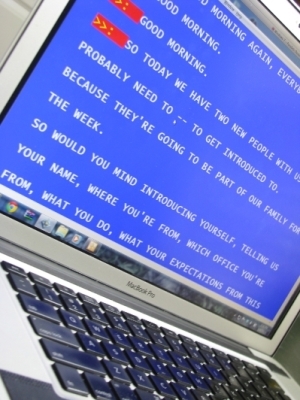
CART is also a method of capturing the spoken word and displaying it for the consumer(s) to view.  This can either be displayed on a laptop computer for one individual consumer, or it could be projected onto a large screen for multiple consumers to view at the same time.  The latter method is ideal for conferences or large meetings.  CART on a laptop could be used in a smaller setting such as high school or college classes, training sessions, medical appointments, or small meetings.

Both methods use the same basic process:  a court reporter will attend the event, taking down the spoken word on her stenography machine, which is connected to her laptop.  The information is then electronically transmitted to a laptop, overhead projector, or encoder for the consumer(s) to view.

If you receive a request from a consumer for CART or captioning for an event, the first thing you will need to do is find a qualified court reporting firm who employs court reporters with that skill set.  Not every court reporter is prepared or skilled to provide CART and captioning.  There are certifications court reporters can attain through the National Court Reporters Association (NCRA).  They are Certified Realtime Reporter (CRR) and Certified Broadcast Captioner (CBC).  So be sure to ask the court reporting firm for a certified court reporter.  You will also need to determine if you need CART or captioning services, as each requires specific equipment, and the costs for each could vary.

In order to provide the best services for you and the consumer, it is extremely helpful if you can provide the court reporting firm with as much information or printed material ahead of time.  This may include printed speeches, PowerPoint presentations, names of speakers, or any complicated or technical terminology that may be discussed during your event.

Once you find a qualified court reporting firm, they can usually walk you through the specifics of your event and help you determine anything additional you may need.

To help you make sure you have gathered all the details needed when scheduling your next CART or captioning event, download the Quick CART and Captioning Scheduling Checklist.

[cta id=”4200″]


ABOUT THE AUTHOR:

Angie Starbuck, RPR/CRR, is a court reporter in Columbus, Ohio, and the owner of PRI Court Reporting, LLC. Connect with her on LinkedIn and Google+.

Download the Deposition Scheduling Checklist

  • This field is for validation purposes and should be left unchanged.
Top